FC
Filter cartridge
Pleated, membrane-grade or capsule element inside the housing.

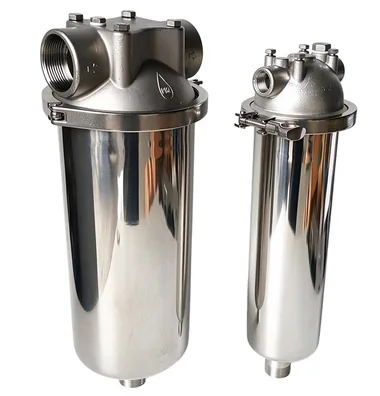
CH · OZZO FilterCartridge Housing
Security housing for pleated, membrane-grade or capsule cartridges protecting downstream equipment and product clarity.
Chosen as the fine or protection stage in pure water, process water, pharma, electronics and corrosive service. Single and multi-element, high-flow horizontal or vertical, and plastic corrosion-resistant configurations are available.
Pure water, process water, pharma, electronics and corrosive liquids.
Working principle, advantages, parameters, construction options and application range for this series.
The cartridge acts as the filter element for precision liquid filtration, removing trace fines and bacteria, with high rating, high efficiency and large dirt-holding capacity. The pressure unit consists of shell, cover and cartridges; maintenance is cleaning or cartridge changeout, with a range of matched high-performance cartridges.
| Item | Specification |
|---|---|
| Housing material | 304 / 316L / 2205 / PPH / PVDF |
| Cartridge type | Melt-blown / pleated / yarn-wound / sintered powder / high-flow |
| Filtration rating | 0.22–100 μm |
| Cartridge length | 10" / 20" / 30" / 40" |
| Design temperature | < 200 ℃ (metal); < 60 ℃ (PP) |
| Design pressure | 0.6–1.0 MPa |
Pleated, membrane-grade or capsule element inside the housing.
RO/UF membrane stage where it follows the security housing.
Follow a market page for the staged layout and condition basis behind this series.
Parameters below follow the selected construction; final rating, size, temperature, pressure and flow are confirmed against the selected model and process conditions.
Questions buyers most often ask before selecting this series.
Send the medium name and concentration, temperature, working pressure, flow rate, target filtration rating, existing inlet/outlet size and connection, and whether the duty is continuous or batch. If you have a line sketch or pressure-drop record, attach it; we reply with the series, stage arrangement and element direction rather than a generic brochure.
Housing and wetted materials are selected against the actual chemical list, temperature and solids load. The materials listed on this page are the common options; seals and non-metal parts are chosen to match the medium, and the final selection is confirmed in the offer against your process data.
Replacement screens, baskets, bags, cartridges and wear parts are supplied to match the selected model. The change-out interval depends on solids loading and differential pressure; keep the model number and interface on record so the correct spare can be matched.
It holds melt-blown, pleated, yarn-wound, sintered powder and high-flow cartridges in the listed lengths and rating range; the end-cap interface must match the housing. Send the housing model or existing cartridge dimensions to match the FC element.
Change follows differential pressure rather than a fixed calendar interval; replace when the inlet-outlet pressure rises to the recommended change-out point. Surface loading, pre-filtration and solids concentration determine the actual interval.
Bypass usually comes from an element not seated to its correct depth, a damaged or incompatible end-cap/O-ring, a worn tubesheet bore, or reversed flow. Check each element seat and seal, replace the damaged elastomer with the seal material matched to the medium (silicone, EPDM, FKM or PTFE-coated FKM), and confirm inlet-outlet direction.
Depressurize first, then clean the head and seal area of sediment. Look at the old element for rupture, extrusion or channeling, which indicate a seal or sizing problem rather than normal loading. Check the O-ring, lubricate it with a compatible fluid if the housing calls for it, fit the new element to the seat depth, and record model and rating for the next spare.
Share the medium, target rating, temperature and existing interface. We reply with a staged layout and the element direction, not a brochure.