FB
Filter bag
Replaceable bag element matched to the housing and contaminant.

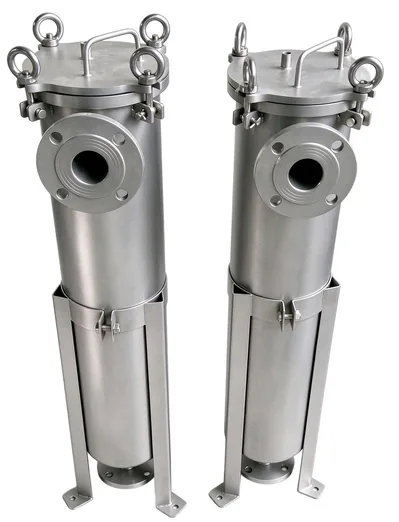
BG · OZZO FilterBag Housing
Bag-on-basket housing for simple, economical consumable changeout across clarifying duties.
Chosen where a replaceable bag is the right consumable and changeout has to be straightforward. Single and multi-bag, top or side entry, quick-opening and duplex series/parallel layouts support on-line bag change.
Clarifying filtration across chemicals, coatings, food, oils and water treatment.
Working principle, advantages, parameters, construction options and application range for this series.
A pressure filter unit made mainly of shell, top cover and basket. The bag is supported by a metal basket; fluid flows out after passing the bag, with debris retained inside. Maintenance is bag changeout. The structure is simple and quick to operate, with economical consumables and a range of matched high-performance bags.
| Item | Specification |
|---|---|
| Housing material | CS / 304 / 316L / 2205 / PPH / PVDF |
| Filter media | PP / nylon / PE / PTFE |
| Inlet / outlet connection | DN25–DN400 |
| Number of bags | 1–24 |
| Filtration area | 0.1–12 m² |
| Design pressure | 0.6–1.6 MPa |
Replaceable bag element matched to the housing and contaminant.
Follow a market page for the staged layout and condition basis behind this series.
Parameters below follow the selected construction; final rating, size, temperature, pressure and flow are confirmed against the selected model and process conditions.
Questions buyers most often ask before selecting this series.
Send the medium name and concentration, temperature, working pressure, flow rate, target filtration rating, existing inlet/outlet size and connection, and whether the duty is continuous or batch. If you have a line sketch or pressure-drop record, attach it; we reply with the series, stage arrangement and element direction rather than a generic brochure.
Housing and wetted materials are selected against the actual chemical list, temperature and solids load. The materials listed on this page are the common options; seals and non-metal parts are chosen to match the medium, and the final selection is confirmed in the offer against your process data.
Replacement screens, baskets, bags, cartridges and wear parts are supplied to match the selected model. The change-out interval depends on solids loading and differential pressure; keep the model number and interface on record so the correct spare can be matched.
The housing takes the bag sizes and ring types matched to its basket and flow; bag length, diameter and collar ring must match the housing opening. Provide the model or the existing bag dimensions so we match the correct FB bag.
The number of bags and filtration area are sized to flow, solids load and allowable differential pressure; single- to multi-bag housings are available in the listed connection range. Exact count and area are confirmed against your duty.
A sudden DP drop, cloudy filtrate or particles downstream usually points to a ruptured bag, a collar not seated on the basket, or a seal bypass rather than normal loading. Stop and inspect the bag, collar seat and gasket; if the bag is intact, check the sealing surface and O-ring before restarting.
Common causes are a rating finer than the duty needs, insufficient filtration area for the flow, high or fluctuating solids load, a damaged basket or sharp internal edge, and media not compatible with the chemical list or temperature. Check pretreatment and rating first; inspect the basket and confirm material compatibility when failures repeat.
Close inlet and outlet, vent and drain to zero pressure before opening the lid. At each change-out inspect the O-ring/gasket and sealing face; replace an aged, cracked or swollen seal with the correct part for the housing model, seat the collar without folds, and close the lid evenly. Do not reuse a damaged seal or fit an improvised thicker ring.
Share the medium, target rating, temperature and existing interface. We reply with a staged layout and the element direction, not a brochure.